Blog
Why Is Moringa Considered a Superfood?

The term “superfood” isn’t a scientific classification. It is generally used to describe foods that are particularly nutrient-dense.
Moringa leaves have attracted attention because they contain several vitamins, minerals and plant compounds in a relatively concentrated form.
This makes Moringa particularly interesting for today’s lifestyles, where people often struggle to maintain a varied, nutrient-rich diet.
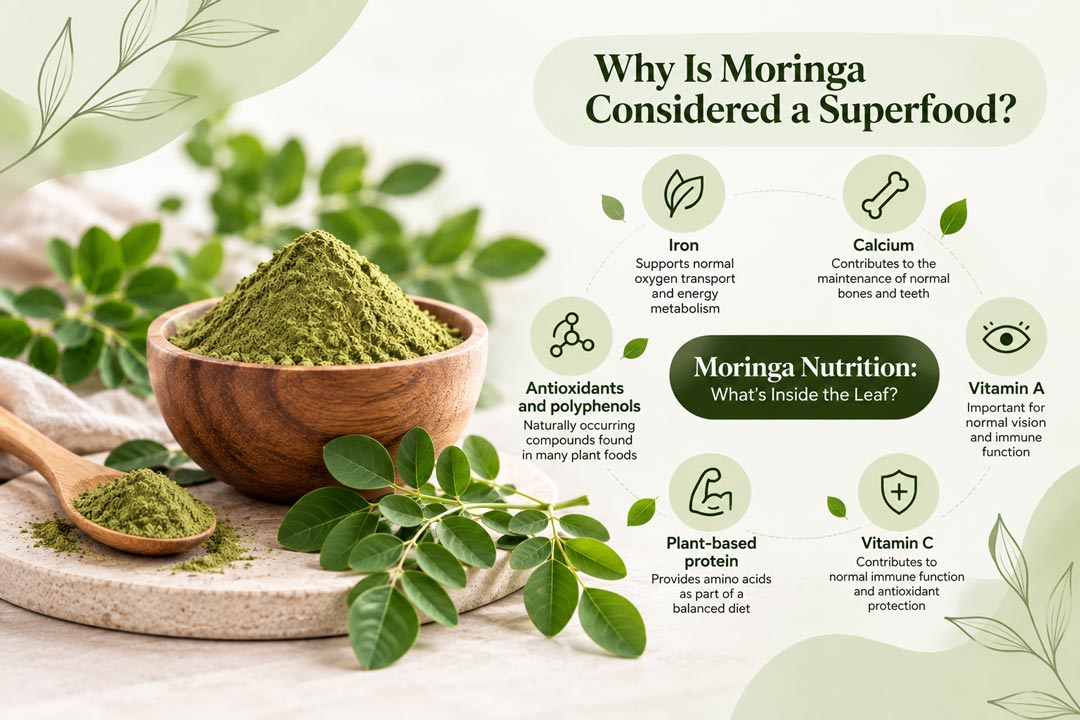
Moringa Nutrition: What’s Inside the Leaf?
Moringa leaves contain a variety of nutrients and naturally occurring plant compounds.
Key nutrients include:
- Iron – Important for normal oxygen transport and energy metabolism.
- Calcium – Contributes to the maintenance of normal bones and teeth.
- Vitamin A – Precursors Important for normal vision and immune function.
- Vitamin C – Contributes to normal immune function and antioxidant protection.
- Plant-based protein – Provides amino acids as part of a balanced diet.
- Antioxidants and polyphenols – Naturally occurring compounds found in many plant foods.